

 See My Latest Article on HelloNation
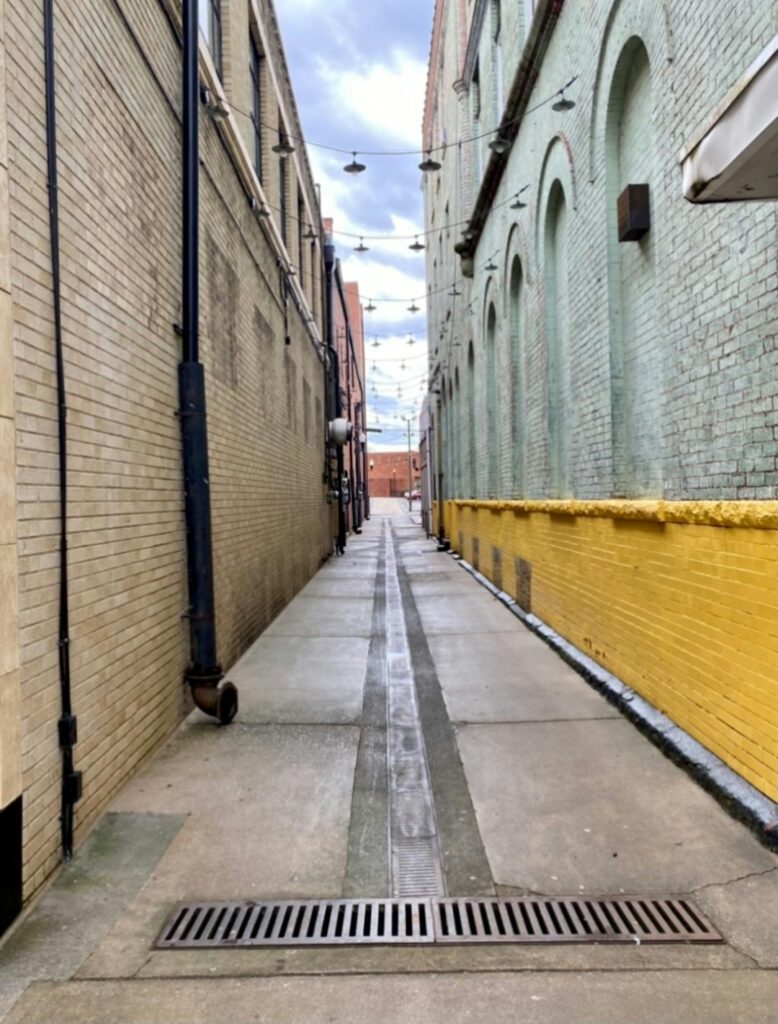
Loading docks handle heavy vehicles, pallet traffic, wash water, melting snow, and large volumes of stormwater. A properly planned trench drain system helps move that water away from dock doors and working areas before it creates unsafe surfaces, building damage, or disruptions to shipping operations.
What does a trench drain do at a loading dock?
A trench drain is a narrow, linear drainage channel installed across a paved or concrete surface. Water enters through a removable grate and flows into an outlet system rather than collecting at the dock face.
At a commercial loading dock, the drain may be positioned:
- Across the entrance to a dock bay
- Along the edge of a sloped loading apron
- In front of dock doors
- Between truck staging areas and the building
- Along washdown or maintenance zones
- Near ramps where water naturally flows toward the structure
The goal is not simply to remove standing water. The system must intercept runoff at the point where it could enter a building, freeze on a travel path, or interfere with loading activity.
Why are loading docks especially vulnerable to drainage problems?
Loading docks combine large paved surfaces with frequent vehicle movement and direct access to interior spaces. Small drainage deficiencies can become operational problems quickly.
Common sources of water include:
- Rainfall running off roofs, trailers, and paved yards
- Snow and ice melting during seasonal temperature changes
- Water used for cleaning equipment or dock surfaces
- Condensation and leaks from refrigerated trailers
- Runoff moving down ramps or across sloped pavement
- Water carried indoors by forklifts, tires, and foot traffic
In Indianapolis, freeze-thaw conditions can make these issues more noticeable during late fall, winter, and early spring. Water that enters a small crack can freeze, expand, and gradually damage concrete joints, drain edges, or nearby pavement. Ice near a dock door also creates a serious slip and vehicle-control hazard.
Where should a trench drain be placed?
Drain placement depends on the site’s slope, dock design, roof drainage, traffic patterns, and discharge point. A drain directly in front of a dock door is common, but it is not automatically the correct location.
A practical layout may require the drain to be positioned far enough from the door to intercept water before it reaches the threshold, while still remaining accessible for cleaning. On sloped approaches, the drain is usually placed across the direction of water flow rather than parallel to it.
The design should account for:
- The direction and speed of surface runoff
- The elevation of dock thresholds
- The location of downspouts and roof drains
- Truck wheel paths and turning movements
- Forklift travel routes
- Door operation and dock equipment
- Existing catch basins or storm connections
- Access for grate removal and sediment cleaning
A drain that is correctly sized but poorly located may collect less water than expected. Conversely, a well-positioned channel can significantly improve performance without occupying much surface area.
What should businesses consider when choosing grate and channel materials?
The trench drain must be rated for the actual loads at the site, not just the expected weight of pedestrians. Loading docks experience repeated wheel loads, turning forces, pallet-jack traffic, and impact from forklifts or other material-handling equipment.
Important considerations include:
- Load rating: The grate and channel should match the heaviest expected traffic and the direction of wheel movement.
- Surface texture: Openings should provide traction without creating excessive vibration or snagging small wheels.
- Corrosion resistance: Exposure to deicing materials, cleaning chemicals, fuel residues, and industrial contaminants can affect material selection.
- Channel durability: The channel body and surrounding concrete must withstand repeated loading without separating or cracking.
- Fastening method: Secure grates reduce rattling, shifting, and the risk of loose components entering traffic paths.
- Maintenance access: Removable sections should be accessible without disrupting normal dock operations.
For many commercial facilities, the surrounding concrete is just as important as the drain itself. If the channel is not properly supported and integrated into the slab, movement at the edges can lead to cracking and water bypass.
How does winter weather affect loading dock drainage?
Winter weather creates two separate challenges: increased water volume during melting events and the possibility of refreezing on the surface.
A trench drain can help collect meltwater, but it cannot prevent freezing if the drainage path is blocked, the surface lacks adequate slope, or temperatures remain below freezing. Facilities should pay attention to:
- Snow storage locations that direct meltwater toward dock doors
- Ice forming inside the grate openings
- Sediment and salt buildup that restricts flow
- Drain outlets that discharge onto pedestrian or vehicle routes
- Cracks around the drain where water can enter the pavement
- Low points where water remains after the main flow has drained
Routine clearing is particularly important after snow events. Leaves, packaging debris, gravel, and salt residue can reduce the open area of the grate and slow drainage when meltwater is most likely to occur.
Can trench drains handle heavy stormwater?
They can, but capacity depends on more than the channel width. The system must be evaluated as a complete drainage path, including the grate opening, channel interior, outlet connection, downstream piping, and discharge location.
A loading dock may receive water from a broad paved yard or roof area. If the outlet is undersized or the downstream system is already restricted, water may back up even when the trench itself appears large enough.
Design questions include:
- How much surface area drains toward the channel?
- What rainfall intensity should be considered?
- Are multiple outlets needed?
- Is the channel slope adequate?
- Can downstream piping accept peak flow?
- Does the discharge point remain functional during heavy rain?
- Are sediment traps or cleanouts accessible?

The answer should be based on the site’s actual drainage area and operating conditions rather than a general assumption that a wider channel will always perform better.
What maintenance does a loading dock trench drain need?
A trench drain usually requires regular inspection and periodic cleaning. Maintenance is easier when it is treated as part of dock housekeeping rather than as an occasional repair item.
A basic inspection should look for:
- Broken, bent, or loose grates
- Standing water after rainfall
- Sediment, gravel, packaging, or leaves in the channel
- Concrete cracking along the drain edges
- Corrosion or chemical damage
- Slow flow at outlet points
- Odors or buildup indicating stagnant water
- Water bypassing the channel during storms
Cleaning frequency depends on traffic, nearby landscaping, shipping materials, washdown practices, and seasonal conditions. High-use facilities may need inspections more often than offices or low-traffic commercial properties.
Drain covers should be replaced securely after cleaning. Leaving sections open near forklifts, trucks, or pedestrians introduces an avoidable hazard.
What are common design and installation mistakes?
Several recurring mistakes reduce drainage performance at commercial loading docks:
- Installing the drain without correcting the surrounding pavement slope
- Choosing a pedestrian-rated grate for heavy vehicle traffic
- Placing the channel directly in a wheel path without checking load conditions
- Connecting the drain to an undersized or obstructed outlet
- Failing to protect the channel during concrete placement
- Allowing concrete edges to remain thin or unsupported
- Ignoring roof downspouts and runoff from adjacent pavement
- Making the grate difficult to remove for routine maintenance
- Discharging water toward another work area or pedestrian route
- Assuming the drain will eliminate all ice formation during freezing weather
The most reliable systems are planned around the full movement of water and the full movement of vehicles, equipment, and workers.
When is site-specific engineering or review necessary?
A qualified design review is warranted when a project involves major grading changes, new dock construction, high stormwater volumes, hazardous materials, structural slabs, or connections to regulated drainage infrastructure. Review may also be necessary when repeated flooding continues after cleaning and minor repairs.
Commercial facilities should verify applicable requirements for stormwater discharge, environmental protection, accessibility, structural loading, and construction work. Requirements can vary based on the property, the type of operation, and the scope of the project.
For local businesses, the most useful starting point is a documented assessment of drainage patterns during both ordinary rainfall and heavy weather. Photographs, water-depth observations, maintenance records, and notes about truck or forklift traffic can reveal whether the primary issue is drain capacity, placement, surface grading, outlet restrictions, or maintenance.
A trench drain is only one part of a loading dock drainage system. Good results depend on coordinated grading, durable materials, sufficient outlet capacity, safe traffic integration, and a maintenance plan that fits the facility’s daily operations.