

 See My Latest Article on HelloNation
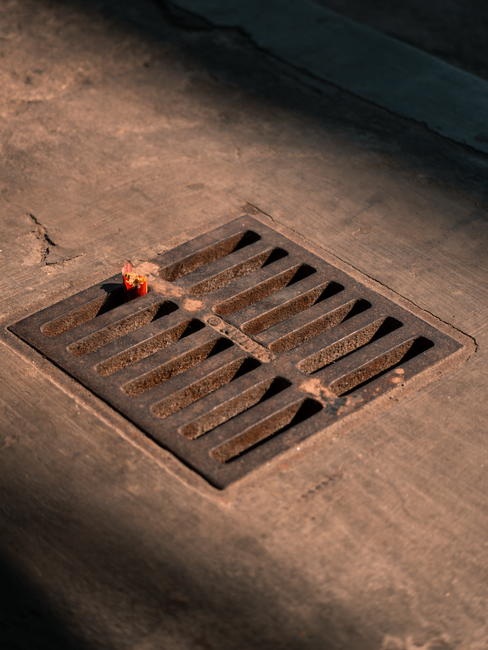
Commercial trench drain systems are designed to collect and direct surface water across loading areas, parking structures, production floors, service yards, entrances, and other large-use spaces. The channel material affects structural strength, chemical resistance, installation requirements, service life, and total maintenance needs.
For commercial properties in Indianapolis, channel selection should account for freeze-thaw cycles, deicing materials, heavy vehicle traffic, rainfall, sediment, and the way each facility is used. No single material is suitable for every application.
What does the channel material do?
The channel is the long, recessed body that receives surface water before directing it toward an outlet or collection point. It is usually covered by a removable grate, which carries the visible traffic load.
The channel material must remain stable while exposed to:
- Foot traffic, carts, forklifts, and vehicles
- Standing water and repeated wet-dry cycles
- Soil pressure and surrounding concrete
- Oil, cleaning agents, salts, and industrial chemicals
- Temperature changes and seasonal movement
- Sediment, debris, and routine maintenance
The grate and the channel are separate components, so a strong grate does not automatically compensate for a channel that is poorly matched to the site.
Which materials are commonly used?
The most common commercial options are polymer concrete, fiberglass-reinforced polymer, and conventional concrete or cast-in-place channel construction. Some systems also use plastic-based channels, but their suitability depends heavily on traffic and site conditions.
Polymer concrete
Polymer concrete combines mineral aggregate with a resin binder. It is commonly selected for commercial areas because it offers high compressive strength, a relatively smooth interior, and good resistance to moisture and many chemicals.
Its advantages include:
- Strong resistance to heavy loading
- Low water absorption compared with ordinary concrete
- Smooth flow surfaces that can reduce buildup
- Good resistance to road salts and many cleaning chemicals
- Factory-formed sections that can improve consistency
The main concerns are weight, handling, and the need for careful bedding. Although polymer concrete is durable, a damaged base or uneven installation can create stress at joints and connections. It may also be more expensive to transport and place than lighter channel materials.
This material is often considered for loading docks, service yards, industrial entrances, parking structures, and other areas where durability is more important than minimizing installation weight.
Fiberglass-reinforced polymer
Fiberglass-reinforced polymer, often called FRP, uses a resin matrix strengthened with glass fibers. It is lighter than polymer concrete and can be useful where installers need to move long channel sections through restricted access areas.
Common benefits include:
- Lower weight for easier handling
- Resistance to corrosion and many chemicals
- Useful performance in wet or corrosive environments
- Flexibility in some specialized installations
- Reduced burden on structures where weight matters
FRP is not automatically the strongest option for every vehicle area. Its performance depends on the channel design, reinforcement, surrounding concrete, and traffic-rated grate. A system intended for pedestrian use should not be assumed suitable for trucks or forklifts.
Facilities that use aggressive cleaning compounds, handle corrosive materials, or have difficult access routes may evaluate FRP carefully. The surrounding installation still needs to protect the channel from impact and movement.
Plastic-based channels
Plastic or composite channels are lightweight and generally easy to cut, position, and connect. They can be appropriate for lower-load commercial areas, landscaped zones, pedestrian walkways, and limited vehicle exposure.
Their limitations become more significant in demanding locations. Prolonged sunlight, high temperatures, heavy wheel loads, or inadequate concrete support can cause movement, deformation, or premature failure depending on the product design.
Plastic-based channels may be practical for a light-duty application, but the load classification, grate selection, and installation details should be reviewed together. A low-cost channel can become an expensive choice if it is installed in an area with heavier traffic than anticipated.
Cast-in-place concrete
Cast-in-place concrete channels are formed directly within the project or constructed as part of a larger concrete installation. They can be useful for unusual dimensions, large drainage volumes, or projects where the channel must integrate closely with the slab.
Potential advantages include:
- Custom dimensions and layouts
- Compatibility with large concrete structures
- High mass and stability
- Ability to match unusual site geometry
The tradeoff is that quality depends strongly on forming, reinforcement, finishing, joints, curing, and field conditions. Poorly controlled concrete work can produce rough surfaces, cracking, low spots, or difficult-to-clean areas.
A cast-in-place design may make sense for a large industrial project, but it requires close coordination between drainage design, structural work, concrete placement, and future maintenance access.
How does Indianapolis weather affect material selection?
Indianapolis experiences freezing temperatures, winter precipitation, spring rainfall, and repeated seasonal temperature changes. These conditions make installation quality especially important.
Water that enters cracks or poorly supported joints can freeze and expand. Deicing salts may also be carried into entrances, loading areas, and parking facilities. The channel material should resist the site’s chemical exposure, but the surrounding concrete and joints need equal attention.
Drainage performance also matters during heavy rainfall. A durable channel will not prevent flooding if the system has inadequate capacity, blocked outlets, insufficient slope, or undersized connections. Material selection is only one part of a functioning system.
Which channel material is best for heavy vehicle traffic?
For regular truck, forklift, or service-vehicle traffic, polymer concrete or a properly designed cast-in-place system is commonly considered before lighter materials. However, the channel body is only one part of the load path.
The grate must have a suitable load classification, and the channel must be surrounded by concrete that can transfer wheel loads safely. The design should also account for turning wheels, braking, impact, and traffic crossing the drain at an angle. These forces can be more demanding than a vehicle traveling straight over the grate.
A channel rated only for pedestrian or light commercial use should not be placed in a loading area simply because the grate appears heavy.
What matters more: material or installation?
Both matter, but installation often determines whether the selected material performs as intended. A strong channel can fail early if it is set on an unstable base, lacks proper concrete support, has poorly aligned joints, or is placed at the wrong elevation.
Important installation considerations include:
- Stable and properly prepared bedding
- Correct channel slope and outlet elevation
- Adequate concrete encasement
- Proper treatment of joints and transitions
- Protection from construction debris
- Accurate grate elevation relative to the finished surface
- Access for cleaning and inspection
The top of the grate should generally align with the surrounding surface so water can enter freely without creating a trip edge or collecting sediment along the perimeter.
How should businesses compare total cost?
Purchase price is only one part of the decision. A realistic comparison includes transportation, labor, concrete requirements, grate cost, outlet connections, cleaning access, repairs, and expected service life.
A lighter channel may reduce handling costs but require more surrounding support. A heavier channel may cost more to move but offer greater resistance to traffic and impact. A chemically resistant material may reduce replacement risk in a facility that uses harsh cleaning agents.
For business-to-business facilities, the most useful question is not “Which material is cheapest?” It is “Which material provides the needed performance with manageable installation and maintenance demands?”
What common mistakes should be avoided?
Several mistakes occur repeatedly in commercial drainage planning:
- Selecting the channel before identifying traffic loads
- Treating the grate rating as the entire system rating
- Ignoring chemicals, oils, salts, or cleaning compounds
- Assuming all lightweight channels are suitable for vehicles
- Failing to plan for sediment removal
- Placing the drain where doors, equipment, or stored materials block access
- Allowing construction debris to remain inside the channel
- Using a material without confirming compatibility with the surrounding concrete
The best selection begins with the operating conditions of the property. Traffic, water volume, chemical exposure, temperature changes, maintenance practices, and available installation space should be considered together.
A practical material comparison
Polymer concrete is generally a strong choice for demanding commercial traffic and areas exposed to moisture or deicing materials. FRP may be useful where corrosion resistance and light handling are priorities. Plastic-based channels can fit lighter-duty applications when protected from excessive loads. Cast-in-place concrete offers flexibility for large or unusual installations but requires careful field execution.
For facilities in Indianapolis, the most reliable decision usually comes from matching the channel, grate, concrete surround, outlet design, and maintenance plan as one coordinated system rather than choosing a material in isolation.